

Call Us Today
847-240-9010

Recent Blog Posts
How Can You Prove a Serious Neck or Back Injury for Workers’ Compensation?
 Neck and back injuries can be some of the hardest work injuries to prove. It may be difficult to get diagnostic scans showing something like soft tissue damage or a pinched nerve. Insurers may question whether the injury is as serious as you say, or whether it happened at work at all.
Giving your employer prompt notice and objective medical evidence linking your injury to your job can help your claim. Our Schaumburg, IL workers’ compensation lawyer can help you organize evidence for your 2026 claim.
What Medical Evidence Can Indicate a Neck or Back Injury in an Illinois Workers’ Comp Case?
Objective test results can strengthen your claim, even though they are not required in every case. Findings a doctor can see or measure are harder for an insurer to dispute than verbal reports of pain.
Useful evidence for your case can include:
Is There a Maximum Amount of Compensation I Can Get From a Serious Truck Accident?

Illinois does not set a cap on the compensation you can recover from a truck accident. Truck accidents often lead to serious, potentially life-altering injuries. These injuries may require substantial care in the short and long term. Compensation awards for these kinds of accidents can be extremely high, sometimes reaching into the millions of dollars.
If you were seriously hurt in a truck accident in 2026, a Mt. Prospect, IL truck accident attorney can help you find out what your case is worth and who owes you.
Why Doesn't Illinois Law Set a Maximum Amount You Can Recover After a Truck Accident?
Lawmakers have tried capping damages for personal injury cases before, specifically in medical malpractice cases. Illinois courts have struck these down as unconstitutional more than once. For a typical truck accident injury claim, Illinois does not set a general cap on compensatory damages.
When Does a Work Injury Qualify for Permanent Disability Benefits?

Some workplace injuries heal completely. Others can leave a worker with permanent limits or unable to work at all.
Illinois workers' compensation may provide permanent disability benefits when a work injury causes lasting limitations. There are two main types of permanent disability: permanent total disability and permanent partial disability. A Des Plaines, IL workers' compensation lawyer can help you understand which category of disability might apply to your case in 2026.
What Qualifies as a Permanent Disability Under Illinois Workers' Compensation?
A permanent partial disability is a lasting impairment that still leaves you able to work in some capacity. Permanent total disability covers an injury that leaves you unable to work at all.
An injury can be considered permanent once you have reached a point called "maximum medical improvement" (MMI). This means your condition has stabilized and further treatment isn't expected to make it better. A doctor will usually determine when you have reached MMI.
What Makes a Personal Injury Case Go to Trial Instead of Settling?
 Most personal injury cases settle before reaching a courtroom. Some, however, require the injured person to file a lawsuit, and a smaller number ultimately proceed to trial. The deciding factor is typically whether the parties can reach a settlement before a judge or jury must decide the case. If they cannot, a judge or jury will make the final decision for them.
A DuPage County, IL personal injury lawyer can help you understand the implications of your case going to trial in 2026.
Why Do Most Illinois Personal Injury Cases Settle Outside of Court?
Settlement is often financially advantageous for both sides. Trials are expensive, time-consuming, and unpredictable. Insurance companies may have strong incentives to avoid the expense and uncertainty of trial. Court proceedings are stressful for plaintiffs. A settlement out of court offers compensation and closure much sooner than most trials.
Are Apartment Complexes Liable for Tenant Injuries?
 Apartment complexes and landlords in Illinois are subject to premises liability law, just like other properties. If a tenant is injured because of a dangerous condition the landlord was responsible for and should have known about but did not fix, the landlord (or complex owner) may be held liable.
If you were hurt on your apartment complex’s property in 2026, a Schaumburg, IL personal injury lawyer can help you figure out whether the complex is responsible.
When Is a Landlord Legally Responsible for a Tenant's Injury in Illinois?
A landlord is responsible for injuries on their property when they should have addressed safety hazards and failed to do so, resulting in an injury. Under the Illinois Premises Liability Act (740 ILCS 130/), property owners owe a duty of reasonable care to people lawfully on their property. Tenants of an apartment complex certainly qualify as lawfully on the property.
What Benefits Does Workers' Compensation Actually Cover?
 If your employer offers workers’ compensation, they likely gave you a brief overview of what it covered when you got hired. In practice, workers’ comp claims aren’t always as straightforward as you would like them to be. It can be difficult to understand what exactly workers’ comp will and won’t cover under your specific circumstances. A Mt. Prospect, IL workers' compensation lawyer can help you understand the full scope of benefits available to you in 2026.
What Types of Benefits Can an Injured Worker Receive in Illinois?
Workers' compensation in Illinois covers more than just your hospital bill. Under the Illinois Workers' Compensation Act (820 ILCS 305), injured workers are entitled to several distinct categories of benefits depending on the nature and severity of their injuries.
Can You Still Sue if You Were Partially at Fault for an Accident?
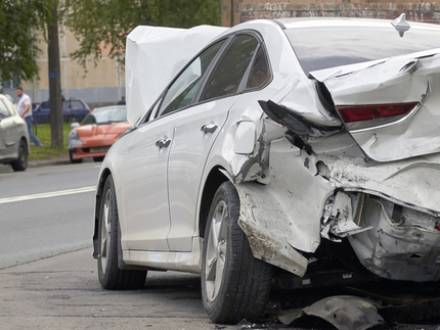 In Illinois, if you are partially responsible for an accident, you may still be eligible to recover compensation for your losses. It all depends on how much you contributed to the incident and your injuries.
If you have a case in which you were partially at fault, a Des Plaines personal injury lawyer can help you know if you still have the right to pursue compensation.
Why Does Illinois Allow People To Recover Damages Even if They Were Partly at Fault?
Illinois uses a legal framework called "modified comparative fault." This system, found in 735 ILCS 5/2-1116, allows you to still recover compensation even if you were partly responsible for the accident. This is fairer than other fault laws, which may go so far as to stop you from recovering damages if you had any fault at all.
What Happens If You Are Injured in a Hit-and-Run Accident?
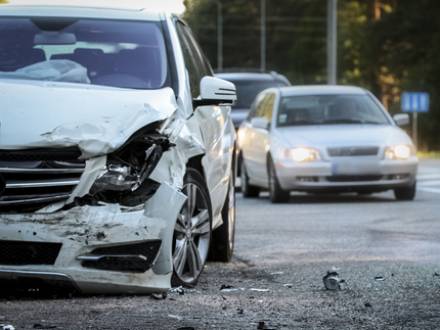 A hit-and-run accident is one of the most frustrating car wreck situations possible. Your car is damaged, you may be hurt, and the person responsible just drove away. If this happens to you in Illinois in 2026, you still have options for getting the compensation you deserve. A DuPage County car accident attorney can help you understand what steps to take next.
What Are Your Legal Rights After a Hit-And-Run in Illinois?
A hit-and-run occurs when a driver involved in a crash leaves the scene without stopping to exchange information, see if anyone is injured, and wait for police to arrive. Under 625 ILCS 5/11-401, Illinois law requires drivers involved in an accident that causes injury or death to stop immediately, give their information, and offer reasonable assistance to anyone hurt. Law 625 ILCS 5/11-402 requires drivers to stop in the event of property damage.
Workers' Compensation vs. Third-Party Work Injury Claims
 If you get injured at work in 2026, it’s important to know that workers’ compensation is not always your only option for collecting damages. In some situations, you may also have the option to file a separate lawsuit against a third party who caused your injury.
Understanding the difference between workers' compensation and third-party claims can help you maximize the compensation you receive. If you were injured at work, a Schaumburg work injury attorney can look at your case and explain all your legal options.
What Is Workers' Compensation and What Does It Cover?
Workers' compensation is a no-fault insurance system in Illinois. This means that regardless of whose fault your injury is, you get quick compensation without having to take your employer to court. In exchange, your employer is usually safe from being sued. Under 820 ILCS 305, most employers must carry workers' comp insurance.
5 Ways Nursing Home Understaffing Can Cause Patient Death
 When you place a loved one in a nursing home, you trust that facility to provide safe, attentive care. Unfortunately, understaffing at nursing homes is a serious problem across the country, including in Illinois. Understaffing happens when nursing homes try to save money by hiring fewer workers than they need.
When facilities do not have enough people on duty, residents can easily get into life-threatening situations. If you have a loved one in a nursing home in 2026, our Des Plaines nursing home neglect attorney can help you understand the risks and your legal options.
Staff members become overwhelmed trying to care for too many residents at once. Important tasks get delayed, and residents can be unattended for hours. The result can be tragic. Below are five common ways that nursing home understaffing can lead to patient deaths.


Our personal injury and workers' compensation lawyers, with offices located in Schaumburg and Chicago, serve the people of the northwest suburbs, including Arlington Heights, Barrington, Bartlett, Bensenville, Bloomingdale, Buffalo Grove, Carpentersville, Crystal Lake, Des Plaines, Elgin, Elk Grove Village, Hanover Park, Hoffman Estates, Itasca, Joliet, Kankakee, Mount Prospect, Palatine, Prospect Heights, Rockford, Rolling Meadows, Roselle, Schaumburg, South Elgin, Streamwood, Wheaton, Wheeling, and Wood Dale.
Results listed are not a guarantee or indication of future case results.

Contact Our Firm
 The use of the Internet or this form for communication with the firm or any individual member of the firm does not establish an attorney-client relationship. Confidential or time-sensitive information should not be sent through this form.
I have read and understand the Disclaimer and Privacy Policy.